

Technology-Driven Solutions for Food Sustainability and Nutrition in the Tropical Environment
2-nd International Conference Biotechnology on Tropical Environment (ICBTE) 2026
📍 Venue: Universitas Aisyiyah Yogyakarta, Indonesia | 🗓️ Conference Dates: Wednesday, September 7-8, 2026
Welcome to ICBTE
Sustainable Agriculture and Food Production Systems
- Sustainable and climate-smart agriculture in tropical regions
- Innovative farming systems and food production technologies
- Resource-efficient and resilient agricultural practices
Food Systems, Security, and Tropical Food Mapping
- Food security and sustainable food systems
- Tropical food mapping and local food diversity
- Food supply chains and distribution systems
Food Processing, Safety, and Quality Systems
- Food processing and postharvest technology
- Food safety, quality assurance, and traceability
- Risk assessment and regulatory aspects of food systems
Biotechnology and Innovation in Food and Agriculture
- Biotechnology applications in food production and agriculture
- Fermentation, biofortification, and alternative proteins
- Microbial and biotechnological innovations in food systems
Functional Foods, Nutraceuticals, and Nutrition Innovation
- Functional foods and bioactive compounds
- Nutraceuticals and health-promoting diets
- Innovation in food-based nutritional solutions
Clinical Nutrition and Medical Applications
- Medical nutrition therapy and diet-based interventions
- Personalized nutrition and precision medicine
- Clinical evaluation of nutrition interventions
Nutrition, Immunity, and Infectious Diseases
- Nutrition and immune system interactions
- Nutritional aspects of tropical and infectious diseases
- Diet-based prevention and management strategies
Translational Research in Food, Nutrition, and Health
- Translating food and nutrition research into clinical practice
- Biomarkers and diagnostics in nutrition and health
- Integration of food science and medical research
Public Health Nutrition and Epidemiology
- Nutritional epidemiology and disease burden
- Community nutrition and population-based interventions
- Double burden of malnutrition in tropical regions
Nutrition, Microbiome, and Mental Health
- Gut microbiota and human health
- Nutrition and cognitive/mental health
- Diet–microbiome interactions
Maternal, Child, and Adolescent Nutrition
- Early-life nutrition and developmental outcomes
- Stunting, wasting, and micronutrient deficiencies
- Maternal and child health nutrition programs
Keynote Speakers
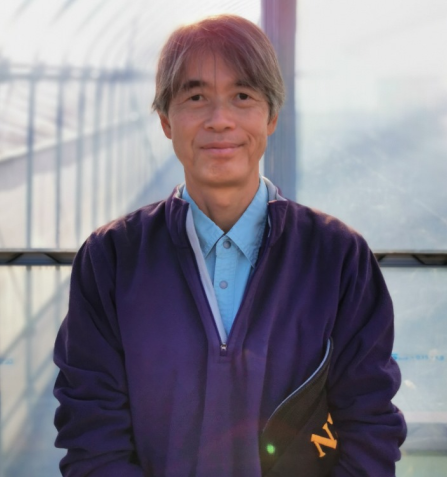
Your content goes here. Edit or remove this text inline or in the module Content settings. You can also style every aspect of this content in the module Design settings and even apply custom CSS to this text in the module Advanced settings.

Your content goes here. Edit or remove this text inline or in the module Content settings. You can also style every aspect of this content in the module Design settings and even apply custom CSS to this text in the module Advanced settings.
“Technology-Driven Solutions for Food Sustainability and Nutrition in the Tropical Environment“
2-nd Internasional Conference Biotechnology on Tropical Environment (ICBTE) 2026Statement of Publication Ethics and Malpractice
Section A: Publication and authorship
- All submitted papers are subject to strict peer-review process by at least two international reviewers that are experts in the area of the particular paper.
- The factors that are taken into account in review are relevance, soundness, significance, originality, readability and language.
- The possible decisions include acceptance, acceptance with revisions, or rejection.
- If authors are encouraged to revise and resubmit a submission, there is no guarantee that the revised submission will be accepted.
- Rejected articles will not be re-reviewed.
- The paper acceptance is constrained by such legal requirements as shall then be in force regarding libel, copyright infringement and plagiarism.
- No research can be included in more than one publication.
Section B: Editors’ responsibilities
- Editors have complete responsibility and authority to reject/accept an article.
- Editors are responsible for the contents and overall quality of the publication.
- Editors should always consider the needs of the authors and the readers when attempting to improve the publication.
- Editors should guarantee the quality of the papers and the integrity of the academic record.
- Editors should publish errata pages or make corrections when needed.
- Editors should have a clear picture of a research’s funding sources.
- Editors should base their decisions solely one the papers’ importance, originality, clarity and relevance to publication’s scope.
- Editors should not reverse their decisions nor overturn the ones of previous editors without serious reason.
- Editors should preserve the anonymity of reviewers.
- Editors should ensure that all research material they publish conforms to internationally accepted ethical guidelines.
- Editors should only accept a paper when reasonably certain.
- Editors should act if they suspect misconduct, whether a paper is published or unpublished, and make all reasonable attempts to persist in obtaining a resolution to the problem.
- Editors should not reject papers based on suspicions, they should have proof of misconduct.
- Editors should not allow any conflicts of interest between staff, authors, reviewers and board members.
- Editors ensure that the submitted fullpapers are reviewed without regard to the authors’ race, gender, sexual orientation, religious belief, ethnic origin, citizenship, or political philosophy.
Section C: Authors’ responsibilities
- Authors must certify that their manuscripts are their original work.
- Authors must certify that the manuscript has not previously been published elsewhere.
- Authors must certify that the manuscript is not currently being considered for publication elsewhere.
- Authors must participate in the peer review process.
- Authors are obliged to provide retractions or corrections of mistakes.
- All Authors mentioned in the paper must have significantly contributed to the research.
- Authors must state that all data in the paper are real and authentic.
- Authors must notify the Editors of any conflicts of interest.
- Authors must identify all sources used in the creation of their manuscript.
- Authors must report any errors they discover in their published paper to the Editors.
Section D: Reviewers’ responsibilities
- Reviewers should keep all information regarding papers confidential and treat them as privileged information.
- Reviews should be conducted objectively, with no personal criticism of the author
- Reviewers should express their views clearly with supporting arguments
- Reviewers should identify relevant published work that has not been cited by the authors.
- Reviewers should also call to the Editor in Chief’s attention any substantial similarity or overlap between the manuscript under consideration and any other published paper of which they have personal knowledge.
- Reviewers should not review manuscripts in which they have conflicts of interest resulting from competitive, collaborative, or other relationships or connections with any of the authors, companies, or institutions connected to the papers.
Fee and Facilities
Fee
| Category | Offline (IDR) | Online (IDR) |
|---|---|---|
| International Presenter | 1.000.000,00 | 1.000.000,00 |
| International Non-Presenter | 250.000,00 | 250.000,00 |
| General Presenter | 500.000,00 | 350.000,00 |
| General Non-Presenter | 50.000,00 | 50.000,00 |
| General Student Presenter | 300.000,00 | 250.000,00 |
| General Student Non-Presenter | 50.000,00 | 50.000,00 |
| Presenter - Student of Unisa Yogyakarta | 100.000,00 | 75.000,00 |
| Non-Presenter - Student of Unisa Yogyakarta | 50.000,00 | 50.000,00 |
Facilities
- Lunch
- Coffee Break
- Certificate
- International Conference ICHST Proceeding
- Selected papers will be published Scopus Proceedings (On process)
- Scopus Journal Sinta 2 Journal and others Journal
Payment
BSI (Bank Syariah Indonesia)
Account Number 1000121092
a.n LPPM UNISA Yogya
SWIFT Code: BSMDIDJA
Schedule of Important Deadlines
| Event | Date |
|---|---|
| Registration Period | June 1 – September 15, 2025 |
| Full Paper Submission | Deadline: September 15, 2025 September 20, 2025 |
| Payment Deadline | September 15, 2025 |
| Article Review | September 1-15, 2025 (To Be Confirmed) |
| Article Revision | September 16-23, 2025 (To Be Confirmed) |
| Conference Days | Wednesday, September 24, 2025 (07:00–16:00) |
How to Join Us

Register Online

Submit Your Paper (for Presenters)

Make the Payment
Transfer the registration fee to the designated account (see fee details).

Confirmation
Committees
Scientific Committee
- Assoc. Prof. Dr. Zuraida Binti Zainun - Universiti Sains Malaysia, Malaysia.
Scopus ID: 55371915300 - Asst. Prof. Dr. Khadizah binti Haji Abdul Mumin - PAPRSB Institute of Health Sciences, Brunei Darussalam.
Scopus ID: 56720402400 - Assoc. Prof. Dr. Law Jia Xian - The National University of Malaysia (UKM), Malaysia.
Scopus ID: 56111758600 - Prof. Kazusato Ohshima - Affiliation: Saga University, Japan.
Scopus ID: 56222204700 - Prof. Madya Ts. Dr. Noor Akhmazillah Binti Mohd Fauzi - Universiti Tun Hussein Onn Malaysia (UTHM), Malaysia.
Scopus ID: 55929412400 - Prof. Tatsuo Sato - Center for International Field Agriculture Research & Education, Japan.
Scopus ID: 59439194200 - Ishaya Madaki - Fellow African Institute of Public Health, Cameroon.
LinkedIn - Khaniz Fatema Chowdhury - Faculty of Medicine and Biomoleculer, University of Dhaka, Bangladesh.
LinkedIn - Dr. Aida Pilav, Doctor of Medicine (M.D.) - Faculty of Health Studies, University of Sarajevo, Sarajevo, Bosnia and Herzegovina.
Scopus ID: 23498635800 - Annisa Khumaira, S.P., M.Bioteh. - Universitas Aisyiyah Yogyakarta, Indonesia.
Scopus ID: 57209273514 - Wantonoro, Ph.D. - Universitas Aisyiyah Yogyakarta, Indonesia.
Scopus ID: 57216841055 - Andari Wuri Astuti, Ph.D. - Universitas Aisyiyah Yogyakarta, Indonesia.
Scopus ID: 57211968612 - Rizal Aziz, S.Si., M.Biotech., M.Sc., Ph.D. - Universitas Indonesia, Indonesia.
Scopus ID: 57200204789 - Fuad Gandhi Torizal D.D.S., M.Biotech., Ph.D. - Universitas Aisyiyah Yogyakarta, Indonesia.
Scopus ID: 57208595054 - Cesa Septiana, Ph.D. - Universitas Aisyiyah Yogyakarta, Indonesia.
Scopus ID: 57216415700 - Sharfina Mutia Syarifah, B.Sc, M.Eng. - Universitas Aisyiyah Yogyakarta, Indonesia.
Scopus ID: 57210261714
Steering Committee
- Prof. Ir. Sarjito, MT., Ph.D., IPM - Universitas Muhammadiyah Surakarta, Indonesia.
- Dr. Aris Slamet Widodo, SP., M.Sc. - Universitas Muhammadiyah Yogyakarta, Indonesia.
- Prof. Sunardi, Ph.D, : Universitas Ahmad Dahlan, Indonesia
- Dr. Dra. Retno Rusdjijati, M.Kes - Universitas Muhammadiyah Magelang, Indonesia.
- Dr. Aji Prasetya Wibawa - Universitas Negeri Malang, Indonesia
- Andri Pranolo, Ph.D, - Universitas Ahmad Dahlan, Indonesia
- Prof. Dr. Ir. Muji Setiyo, S.T., M.T. - Universitas Muhammadiyah Magelang, Indonesia.
- Taufiqurrahman, S.IP, MA, Ph.D - Universitas Muhammadiyah Yogyakarta, Indonesia.
- Ners. Robiul Fitri Masyitoh, S.Kep, M.Kep - Universitas Muhammadiyah Magelang, Indonesia.
- Yuyun Sri Wahyuni, M.Hum - Universitas Muhammadiyah Sukabumi, Indonesia.
Organizing committee
Advisory Board
- Dr. Warsiti, S.Kp., M.Kep., Sp.Mat. - Universitas Aisyiyah Yogyakarta, Indonesia.
- Dr. Sulistyaningsih, S.KM., MH.Kes. - Universitas Aisyiyah Yogyakarta, Indonesia.
- Dr. Yuli Isnaeni, S.Kp., M.Kep., Sp.Kom. - Universitas Aisyiyah Yogyakarta, Indonesia.
- Prof. Dr. Dr. Mufdlilah, S.SiT., M.Sc. - Universitas Aisyiyah Yogyakarta, Indonesia.
- Dr. Dr. M. Ali Imron, S.Sos., M.Fis. - Universitas Aisyiyah Yogyakarta, Indonesia.
Chairman
Luluk Rosida, S.ST.,M.KM. - Universitas Aisyiyah Yogyakarta, Indonesia.
Secretary
- Dinar Mindrati Fardhani, S.P, M.Biotech, Ph.D. - Universitas Aisyiyah Yogyakarta, Indonesia.
- Andari Wuri Astuti, Ph.D. - Universitas Aisyiyah Yogyakarta, Indonesia.
- Cesa Septiana, Ph.D. - Universitas Aisyiyah Yogyakarta, Indonesia.
- Sharfina Mutia Syarifah, B.Sc, M.Eng. - Universitas Aisyiyah Yogyakarta, Indonesia.
Treasurer
- Sri Sugesti, S.KM - Universitas Aisyiyah Yogyakarta, Indonesia.
- Rika Ayu Setyawati, S.Ak. - Universitas Aisyiyah Yogyakarta, Indonesia.
Publication
- Fayakun Nur Rohmah, S.S.T, Bdn, M.P.H - Universitas Aisyiyah Yogyakarta, Indonesia.
- Enny Fitriahadi, S.ST, M.Kes - Universitas Aisyiyah Yogyakarta, Indonesia.
- Annisa Khumaira, S.P, M.Biotech. - Universitas Aisyiyah Yogyakarta, Indonesia.
- Siti Nadhir Ollin Norlinta, M.Fis. - Universitas Aisyiyah Yogyakarta, Indonesia.
Member
- Arif Bimantara, S.Pi., M.Biotec. - Universitas Aisyiyah Yogyakarta, Indonesia.
- Wantonoro, Ph.D.- Universitas Aisyiyah Yogyakarta, Indonesia.
- Apt. Aan Kunaedi, M. Sc. - Universitas Aisyiyah Yogyakarta, Indonesia.
- Dr. Askuri, S.S., M.Si. - Universitas Aisyiyah Yogyakarta, Indonesia.
- Septianto Wikan Nurhidayat, S.Pt., M. Biotech., Ph.D - Universitas Aisyiyah Yogyakarta, Indonesia.
- Dr. Komarudin, S.Psi, M.Psi - Universitas Aisyiyah Yogyakarta, Indonesia.
- Nur Jannah, S.Pd., M.Pd - Universitas Aisyiyah Yogyakarta, Indonesia.
- Prof. Dr. Syamsia, M.Si. - Universitas Aisyiyah Yogyakarta, Indonesia.
- Anindhita Syahbi Syagata, S.Gz, M.P.H - Universitas Aisyiyah Yogyakarta, Indonesia.
Jointly organized with











Contact Us
Telp: +62 877-1023-7524 | Email: icbte@unisayogya.ac.idAddress:
Kampus Terpadu Universitas Aisyiyah (Unisa) Yogyakarta
Jalan Siliwangi (Ring Road Barat) No 63, Mlangi, Nogotirto, Gamping, Sleman, Yogyakarta, Indonesia.